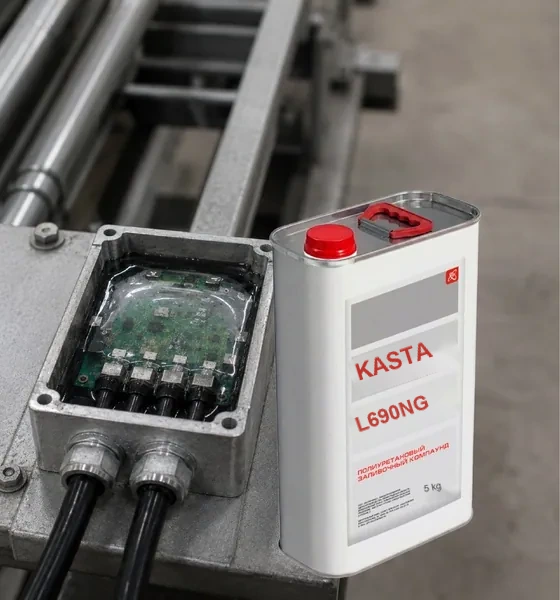
KASTA L690 NG Potting Compound
KASTA L690 NG is a two-component polyurethane electrical insulating compound for casting and sealing electrical engineering products operating at low and medium voltages. The material is used for the electrical insulation of transformers, electric motors, capacitors, voltage dividers, and electronic and electrical devices. The compound is also suitable for producing impact-resistant covers, housings, and other parts by free-pour casting into a mould.
| Pot life, min | 20 ± 5 |
| Post-cure time, h | 1 |
| Time to service, days | 2 |
| Shore D hardness, units | 70 ± 5 |
| Flammability class | G1 |
Description
KASTA L690 NG is designed for applications that require electrical insulation properties, mechanical strength, and the ability to fill a part by free-pour casting at the same time. The compound is used for sealing units and components, protecting current-carrying and structural elements, and producing rigid cast housings and covers.
The pot life of the mixture is 10–20 minutes. For this reason, the mould, containers, tools, and workstation must be prepared before mixing begins. The batch size should be chosen so that a homogeneous mix can be obtained and casting completed before the viscosity rises noticeably.
The components are dosed by weight. Use the following formula for the calculation:
- mB = mA × 0.35
For example, 10 kg of component A requires 3.5 kg of component B; the total mix mass will be 13.5 kg. Accurate weighing is especially important for consistent curing and reproducible properties.
Component A must be thoroughly mixed before use. If the material has crystallised at temperatures below +15 °C, heat it without an open flame to +40...+60 °C and hold until it has fully de-crystallised. After mixing, allow the material to degas and cool to +20...+25 °C.
Applications
- electrical insulation of transformers;
- casting and sealing of electric motors;
- manufacturing and protection of capacitors;
- voltage dividers;
- electronic and electrical devices;
- impact-resistant covers and housings;
- free casting of parts in open or closed moulds.
|
Parameter |
Value |
|
Type |
Two-component polyurethane electrical insulating compound |
|
Purpose |
Casting and sealing of electrical engineering products |
|
Mix ratio A:B |
100:35 by weight |
|
Pot life of the mixture |
10–20 minutes |
|
Demoulding |
After 24 hours |
|
Time to service |
7 days |
|
Hardness |
70 ± 5 Shore D |
|
Flammability class |
G1 |
Characteristics
Physical properties of the components
|
Parameter |
Component A |
Component B |
Method |
|
Dynamic viscosity at 25 °C, mPa·s |
7,000–15,000 |
200–250 |
GOST 25271-93 / ASTM D 4889 |
|
Density at 25 °C, g/cm³ |
1.55 ± 0.02 |
1.22 ± 0.02 |
GOST 18995.1-73 / ASTM D 891 |
|
Shelf life, months |
6 |
6 |
As per technical documentation |
Curing reaction and properties of the cured material
|
Parameter |
Value |
|
Pot life |
10–20 minutes |
|
Post-cure time |
24 hours |
|
Time to service |
7 days |
|
Shore D hardness |
70 ± 5 |
|
Tensile strength |
20 ± 3 MPa |
|
Elongation at break |
4 ± 0.5% |
|
Dielectric permittivity |
3 ± 0.5 |
|
Surface resistivity |
(5 ± 0.4) × 10¹⁵ Ω |
|
Flammability class |
G1 |
The values given are typical and depend on component temperature, mixing quality, casting thickness, curing conditions, and humidity.
Processing conditions
|
Parameter |
Requirement |
|
Air temperature |
Not below +10 °C |
|
Substrate or mould temperature |
+15...+20 °C |
|
Mould temperature in winter |
+18...+20 °C |
|
Substrate moisture content |
Not more than 3% |
|
Relative air humidity |
60–75% |
|
Moisture condensation |
Not permitted |
|
Mixing equipment |
Low-speed mixer, not exceeding 300 rpm |
|
Mixing time |
0.5–1.5 minutes |
Processing procedure
- Prepare a dry mould, clean containers, tools, and personal protective equipment.
- Make sure there is no water or condensation on the components, mould, or substrate.
- Condition the components at the working temperature and thoroughly mix component A.
- Weigh out the components at a mass ratio of 100:35.
- Mix with a low-speed mixer until homogeneous, paying attention to the walls and bottom of the container.
- Pour the mix into an open or closed mould within the pot life.
- Hold the part at +20...+25 °C and demould after 24 hours.
- Before putting into service, hold the part for 7 days to develop the specified properties.
Clean tools and equipment before any residue cures. When working with solvents, follow the safety requirements specified in their documentation.
Storage conditions
Store the components at +10...+25 °C in tightly closed containers, protected from moisture. Freezing is not permitted. The shelf life of each component is 6 months from the date of manufacture, provided the packaging remains sealed.
During transport, protect the containers from damage, water, and sub-zero temperatures. Before opening, allow cold packaging to reach the working temperature to prevent condensation from forming.
|
Parameter |
Requirement |
|
Storage temperature |
+10...+25 °C |
|
Packaging |
Tightly closed |
|
Protection |
Protection from moisture is mandatory |
|
Freezing |
Not permitted |
|
Shelf life |
6 months |
During transport, protect the packaging from damage and water ingress. Before opening, allow cold containers to reach the working temperature so that condensation does not form on the surface or inside the packaging.
Equivalents
Market alternatives in this application class include two-component castable polyurethane resins and liquid plastics of similar hardness. They are not automatic substitutes for KASTA L690 NG: they differ in mix ratio, viscosity, pot life, shrinkage, curing regime, and mould requirements.
For an initial comparison, ADV 69, Altropol NEUKADUR ProtoFlex HS 75, and F-Cast Pro 60 can be considered. These materials belong to the class of two-component polyurethane compounds with a hardness of 70±5 Shore D; however, suitability should be confirmed against their own TDS and the requirements of the specific production process.
Related products
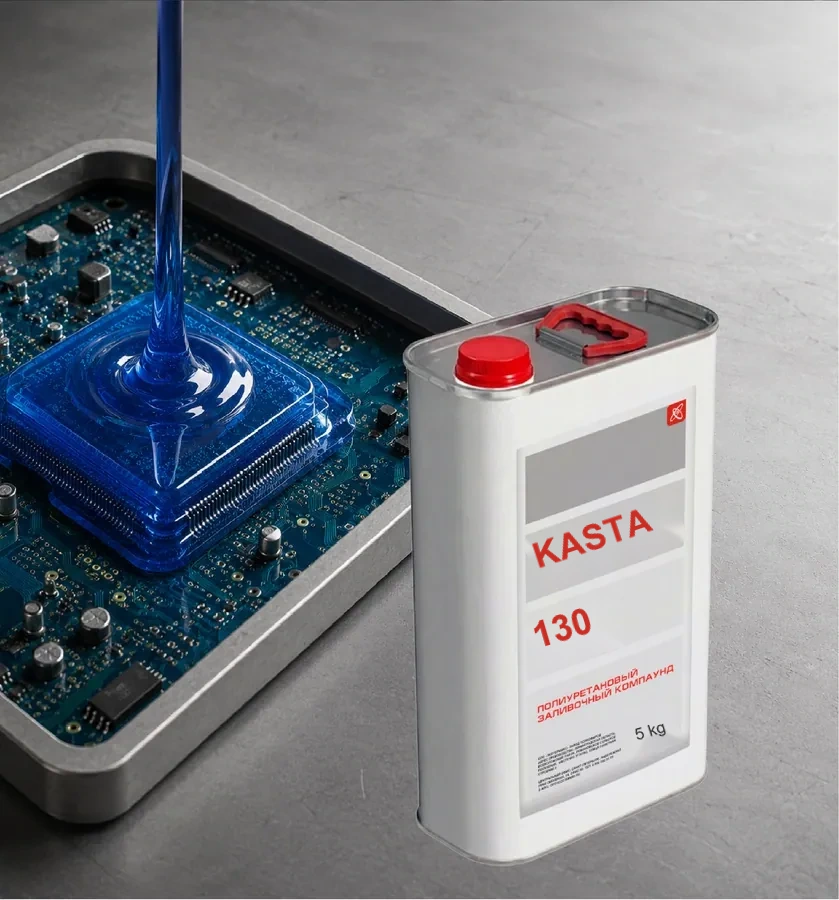
KASTA 130 Compound
Type: polyurethane Shore D hardness, units: 75 ± 3 Pot life, min: 30 ± 5 min Time to service, days: 2
Details →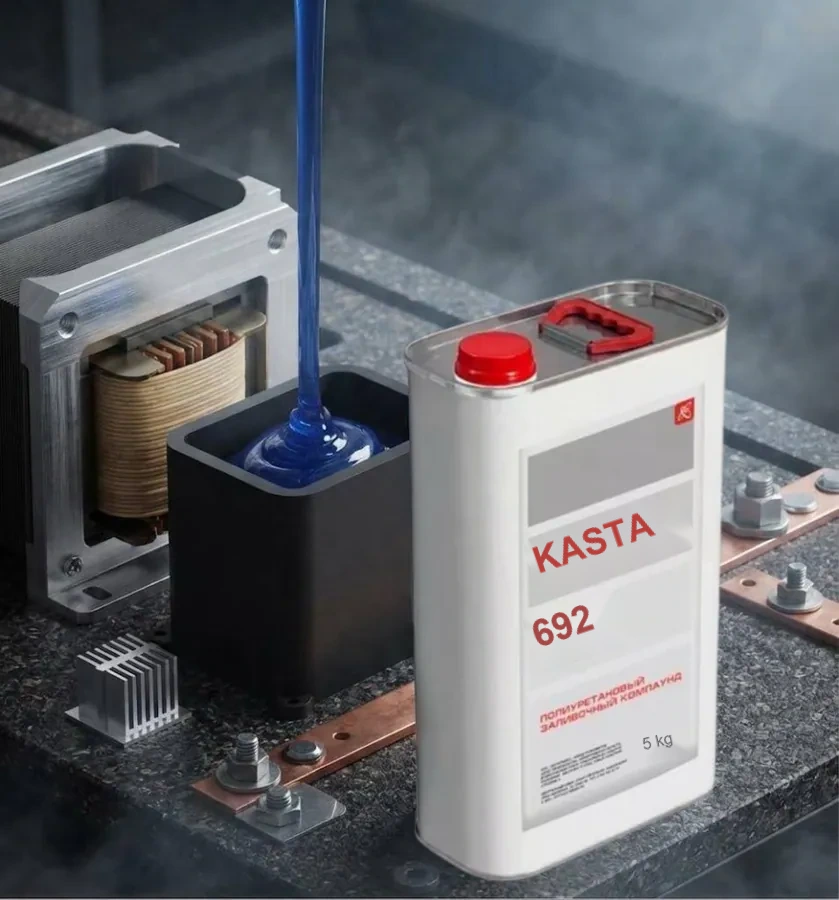
Potting Compound KASTA 692
Type: thermally conductive polyurethane Shore A hardness, units: 85±5 Pot life, min: 10–50 Time to service, days: 2
Details →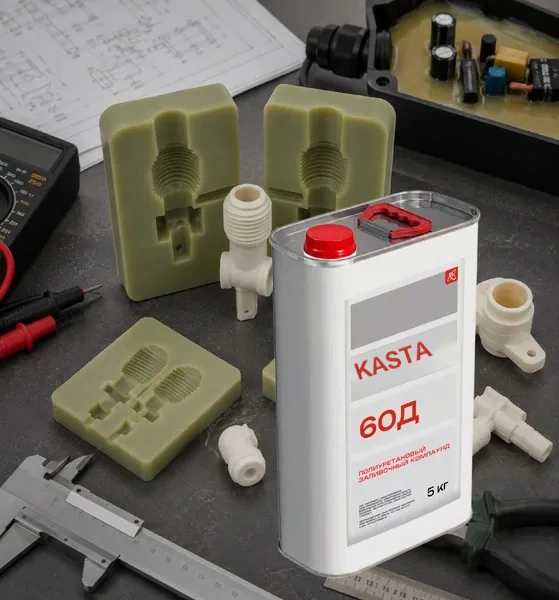
KASTA 60D Potting Compound
Type: polyurethane Shore D hardness, units: 60±5 Pot life, min: 10±5 Time to service, days: 3
Details →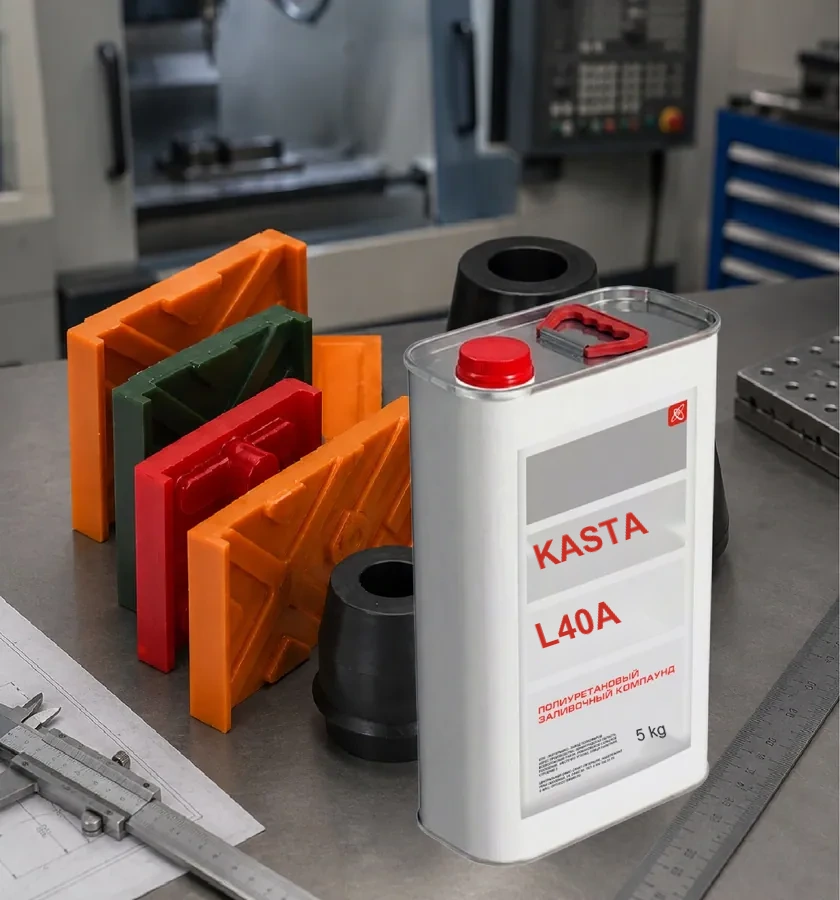
KASTA L40A Potting Compound
Type: polyurethane Shore A hardness, units: 40±5 Pot life, min: 15±5 Time to service, days: 3
Details →Need a quote or technical advice?
Tell us about your application, volumes and destination. Our team will reply with a proposal and technical data sheets.